
The exodus of FPIs from the Indian equity markets continued unabated, as they withdrew over Rs 7,300 crore (about $840 million) in the first week of this month due to global trade tensions, with the US imposing tariffs on countries such as Canada, Mexico, and China. This came following an outflow of Rs 78,027 crore in the entire January. Before that, they invested Rs 15,446 crore in December, data with the depositories showed.

Investors will take cues from the December quarter corporate earnings, with blue-chips like Infosys, Reliance Industries scheduled to report their results this week, in addition, inflation data and trading activity of foreign investors will also be crucial in dictating market trends, analysts said.

Foreign portfolio investors (FPIs) have withdrawn over Rs 12,000 crore from Indian equities this month so far, mainly due to a sustained rise in US bond yields and the uncertain environment resulting from the Israel-Hamas conflict. However, the story takes an intriguing turn on observing FPI activity in Indian debt as they have infused over Rs 5,700 crore into the debt market during the period under review, data with the depositories showed. Going ahead, the trajectory of FPIs' investments in India will be influenced not only by global inflation and interest rate dynamics but also by the developments and intensity of the Israel-Hamas conflict, Himanshu Srivastava, associate director - manager research, Morningstar Investment Adviser India, said.

'Expect FPIs to continue selling for several months until the rupee stabilises.'

Equity investors would track global market trends, inflation data and trading activity of foreign investors for further cues this week, analysts said. Moreover, progress of monsoon and developments related to trade talks would also be monitored by investors, experts noted.

From the 30-share Sensex blue-chip pack, Titan, Adani Ports, UltraTech Cement, Tata Consultancy Services, NTPC, Bharti Airtel, Tech Mahindra, Infosys, Hindustan Unilever and JSW Steel were the biggest laggards.

Donald Trump's tariffs, meant as political punishment, have avoided the predicted chaos, lifting US growth, weakening rivals, and letting him claim victory in a resilient global economy, observes T T Ram Mohan.

The ongoing second quarter earnings, movement of oil benchmark Brent crude and the uncertainty in the Middle East would dictate terms in the domestic markets this week, analysts said. Furthermore, the activities of Foreign Institutional Investors (FIIs) will also influence trading in the markets. "A slew of earnings reports from heavyweights expected this week will significantly impact market direction.

Benchmark stock indices Sensex and Nifty rebounded on Thursday after two days of decline, mirroring a rally in global markets as a US court blocked President Donald Trump's reciprocal tariffs. The 30-share BSE Sensex climbed 320.70 points or 0.39 per cent to settle at 81,633.02.

Households should moderate large discretionary expenses for the time being.
'They should prioritise essential spending. They should maintain an emergency fund covering 6 to 12 months of expenses.'

Indian bonds remained volatile over the past week on uncertainties over the maiden offshore sovereign bonds issuance, according to a report by DBS Group Research.

Banks looking to raise capital via bond sales to fund decade-high credit growth were compelled to put some of these debt issuances on hold amid a sharp rise in yields since late September, sources told Business Standard. A major private lender, Axis Bank, has not yet followed through with a planned issuance of infrastructure bonds worth around Rs 3,000 crore. This is because volatility in the bond market in late September led to investors seeking higher yields, sources said.

Stock markets will be largely driven by global trends in the absence of any major domestic triggers this week, say analysts. The trading activity of foreign investors, global crude oil prices and rupee-dollar movement will also influence market movement, they said. "Anticipating a period of consolidation in the absence of clear global cues, the market's trajectory will likely hinge on the movement of the US bond yields, the dollar index, and crude oil prices, as well as institutional flows.

'Investors can consider staying invested in long duration products as there is a possibility of rate cuts in the near term.' Positive macros - lower inflation, high forex reserves and favourable demand-supply dynamics for government bonds - make a strong case for rate cuts from December, says Devang Shah, head of fixed income, Axis Mutual Fund. In an interview with Abhishek Kumar in Mumbai, Shah says this view may not hold true if commodity prices go up sharply.

Stock markets will be largely driven by global trends and macroeconomic data announcements in a holiday-shortened week which may see volatility amid monthly derivatives expiry, say analysts. Equity markets will remain closed on Monday for Gurunanak Jayanti. Trading activity of foreign investors and the movement of the rupee against the dollar will also be tracked by investors.

'Your decisions should not be driven by your view on the market, but by your objectives, risk appetite, and time horizon.'

After two weeks of buying, FPIs turned net sellers in Indian equities this week, with a net withdrawal of Rs 976 crore amid a strengthening US dollar and steady rise in US 10-year bond yields, impacting investor sentiment. Foreign Portfolio Investors (FPIs) began the week on a positive note, investing Rs 3,126 crore in equities during the first two trading sessions (December 16-20).

Issuers are currently not comfortable with the bids they have been getting for their bond offerings.

Stock market participants would track global trends and foreign investors' trading activity in a holiday-shortened week ahead, amid lack of any major domestic trigger in sight, analysts said. Equity markets will remain closed on Wednesday for Christmas.
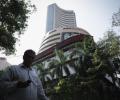
The BSE Sensex has been one of the top-performing areas of investment in the past 40 years, consistently delivering double-digit returns in rupee terms, beating assets such as global equities, precious metals, and fixed income.

Tech Mahindra was the biggest loser in the Sensex pack, slipping 4.59 per cent, followed by Asian Paints, Wipro, Kotak Mahindra Bank, Bajaj Finserv, Infosys, ITC, Mahindra & Mahindra, Hindustan Unilever, IndusInd Bank, Reliance Industries and JSW Steel. In contrast, Larsen & Toubro, Bharti Airtel, Power Grid and Axis Bank were among the gainers.

Foreign brokerages remain cautious on the road ahead for the Indian equity markets. Though analysts at Nomura have revised their March 2026 Nifty target to 26,140 levels from the earlier 24,970, but the upside from the current levels is a modest 6 per cent. BofA Securities, on the other hand, has not made any change to its year-end Nifty target.
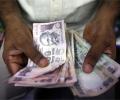
The new bond was changing hands at 7.72 per cent.

'Even if India is attractive, FPIs currently lack the funds to invest, as money is being redirected to the US.'

Sanjay Malhotra has made structural changes to banking regulation to bring down costs and increase efficiency. Plus, he kicked off a benign interest regime. But there are challenges ahead.

'Rhetoric and chest-thumping are running high on India's recent growth record.'
'But will the giant waves developing elsewhere allow us to sail smoothly into fair winds?' asks Debashis Basu.

Foreign investors continue to pull back money from the Indian equity market withdrawing a little over Rs 30,000 crore in the first fortnight of the month amid escalation in global trade tensions. This came following an outflow of Rs 34,574 crore from equities in February and Rs 78,027 crore in January.

Foreign investors have pulled out a massive Rs 22,000 crore from Indian equities so far this month, due to uncertainty surrounding the outcome of the Lok Sabha elections and outperformance of Chinese markets.

Among the Sensex firms, UltraTech Cement, Reliance Industries, ICICI Bank, HDFC Bank, Bharti Airtel, IndusInd Bank, State Bank of India, Tata Consultancy Services, Larsen & Toubro, Kotak Mahindra Bank and State Bank of India were the major gainers. In contrast, Tata Motors, Maruti, Axis Bank, Mahindra & Mahindra, ITC, NTPC, Tata Steel and Bajaj Finserv were the major laggards.

'If rate cuts happen, bond yields will come down and investors will make mark-to-market capital gains on them.'

The recent surge in crude oil prices could shave off the gains made by India Inc in profit margins in the past few quarters. Worse, it comes at a time when consumer demand in the country is slipping and major global economies are witnessing a slowdown. A back-of-the-envelope calculation suggests that the margin expansion accounted for three-fourths of the rise in the listed firms' operating profit between the April-June quarter (Q1) of FY23 and Q1FY24, and only a quarter of profits gains came from revenue growth.
From the Sensex firms, Mahindra & Mahindra, HCL Tech, Tata Motors, Nestle, ITC, Hindustan Unilever, Larsen & Toubro, and Tech Mahindra were the biggest gainers. In contrast, Eternal, UltraTech Cement, Power Grid, Tata Steel and Kotak Mahindra Bank were among the laggards. Eternal dropped 4.51 per cent.

Budget 2026 sticks to fiscal discipline, shuns populist measures despite five key state elections coming up, but ends up rattling stock markets with a higher transaction tax on derivatives trading.

'An asset must generate income. Equities yield dividends, bonds pay coupons, deposits give interest, and real estate earns rent.' 'Gold, silver, and even Bitcoin produce no income, they merely store value. So, they should not be compared to productive assets.'
Trading in stock markets this week will be majorly influenced by the upcoming quarterly earnings from IT majors TCS and Infosys, along with global trends, analysts said. Besides, global oil benchmark Brent crude, rupee-dollar trend and trading activity of foreign investors would also dictate the movement, they said. "On the domestic front, all eyes will be on the beginning of corporate performance for the third quarter of the current fiscal year.

The Reserve Bank of India (RBI), in its Financial Stability Report (FSR), cautioned that stress tests indicate two scheduled commercial banks (SCBs) may have to dip into their capital conservation buffers (CCBs), unless stakeholders infuse capital, under a scenario involving a gradual slowdown in domestic GDP growth and a moderate rise in inflation, with limited policy easing space available to the central bank.

At interactions last week with senior officials from the Reserve Bank of India, select banks gave feedback on two key bond market concerns, namely, recent volatility in the rupee-dollar exchange rate and heavy losses incurred on floating rate government bonds due to a demand-supply mismatch, sources told Business Standard. The discussions were held ahead of the RBI's next monetary policy statement, scheduled on August 5. Indian banks are large holders of government securities because of a regulatory mandate to set aside a certain percentage of deposits in sovereign bonds.

'They can transition from short to long-duration funds when the yield curve normalises.'

Foreign Portfolio Investors' (FPIs) selling spree continues as they pulled out over Rs 3,400 crore from the Indian equity markets in the first three trading sessions of November on rising interest rates and geopolitical tensions in the Middle East. This came after such investors withdrew Rs 24,548 crore in October and Rs 14,767 crore in September, data with the depositories showed. Before the outflow, FPIs were incessantly buying Indian equities in the last six months from March to August and brought in Rs 1.74 lakh crore during the period.

As India faces slowing economic growth, HSBC Global Research has downgraded the Indian stock market outlook from "overweight" to "neutral". In a report, the global financial services firm said profits at India Inc appeared to have softened while valuations are elevated. After annualized growth of 25 per cent in recent years, profits appear to have softened while valuations are elevated at 23x forward earnings.
